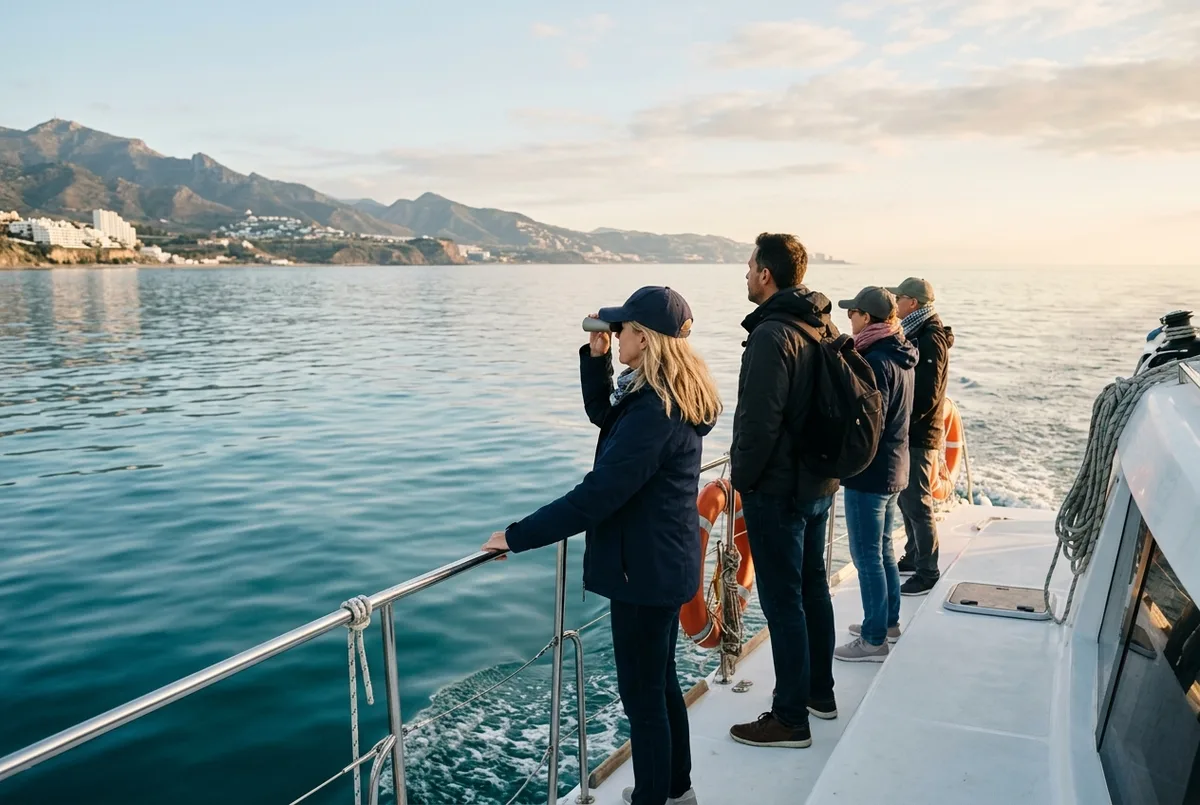
The best time to see dolphins in malaga bay leans toward spring and early summer mornings, when the water off the Costa del Sol tends to sit calmer than it does later in the day or deeper into the hottest summer months. I would not treat this as a guarantee, since dolphins are wild animals that follow food and current rather than a booking calendar, but a calmer sea genuinely makes them easier for the crew and everyone on deck to actually spot. If you want the Malaga boat tour lineup I keep track of here before narrowing in on dolphin watching specifically, that comparison sits on the homepage.
Are There Really Dolphins in Spain?
Yes. Common bottlenose dolphins and striped dolphins live year round in the Alboran Sea and the nearby Strait of Gibraltar, both within easy reach of boats departing the Costa del Sol. This is not a seasonal migration you need to time perfectly, since resident pods stay in these waters throughout the year rather than passing through briefly.
I think this surprises some first-time visitors who expect dolphin watching to be a tropical-destination activity only. The population here is real and well documented, which is exactly why dedicated boat tours exist on this coast in the first place.
Does the Season Actually Change Your Odds?
A little, yes. Spring and early summer tend to bring calmer seas, which makes spotting a surfacing dolphin easier for everyone on deck, crew included. Late summer can bring choppier afternoon winds that make the water’s surface harder to read, and winter sailings depend more on that day’s specific conditions than the season as a whole.
My honest take is that season affects how easy a sighting is to spot, more than it affects whether dolphins are actually present. I would pick a calm-looking forecast over a specific calendar month if you have any flexibility in your travel dates.
Is Morning or Afternoon Better for Dolphin Watching?
Morning, generally. Coastal winds on this stretch tend to build through the day, so an earlier departure gives you calmer water and a better shot at spotting a dolphin’s fin before the surface gets choppy. The same logic applies to the Malaga sunset catamaran cruise departing Malaga’s own harbor, though that sailing is built around the evening light rather than wildlife.
I would book the earliest reasonable slot available if dolphin watching is genuinely your main goal for the day, and treat a later afternoon departure as the fallback rather than the first choice.
What Time of Day Do Dolphins Tend to Be Most Active?
Dolphins in this region are often reported most active during the cooler parts of the day, early morning and sometimes late afternoon, which lines up conveniently with when the water also tends to be calmer. I would read this as a reasonable pattern rather than a fixed rule, since feeding behavior shifts with where fish are moving on a given day.
I would not build your whole trip around chasing a specific hour. A good crew watching consistently across a 1 to 2 hour sailing matters more than any single golden window you read about online.
How Likely Are You to See Dolphins on a Dedicated Cruise?
Operators running the dedicated dolphin watching catamaran cruise from Benalmadena quote roughly an 80 percent chance of a sighting on a given sailing, regardless of exact timing within the season. That figure already accounts for normal day-to-day variation, so I would treat it as a solid baseline rather than something that only applies on a perfect spring morning.
I think it is worth remembering that even an 80 percent chance means roughly one in five sailings comes back without a confirmed sighting. Free cancellation and a realistic mindset going in both matter more than obsessing over the exact calendar date.
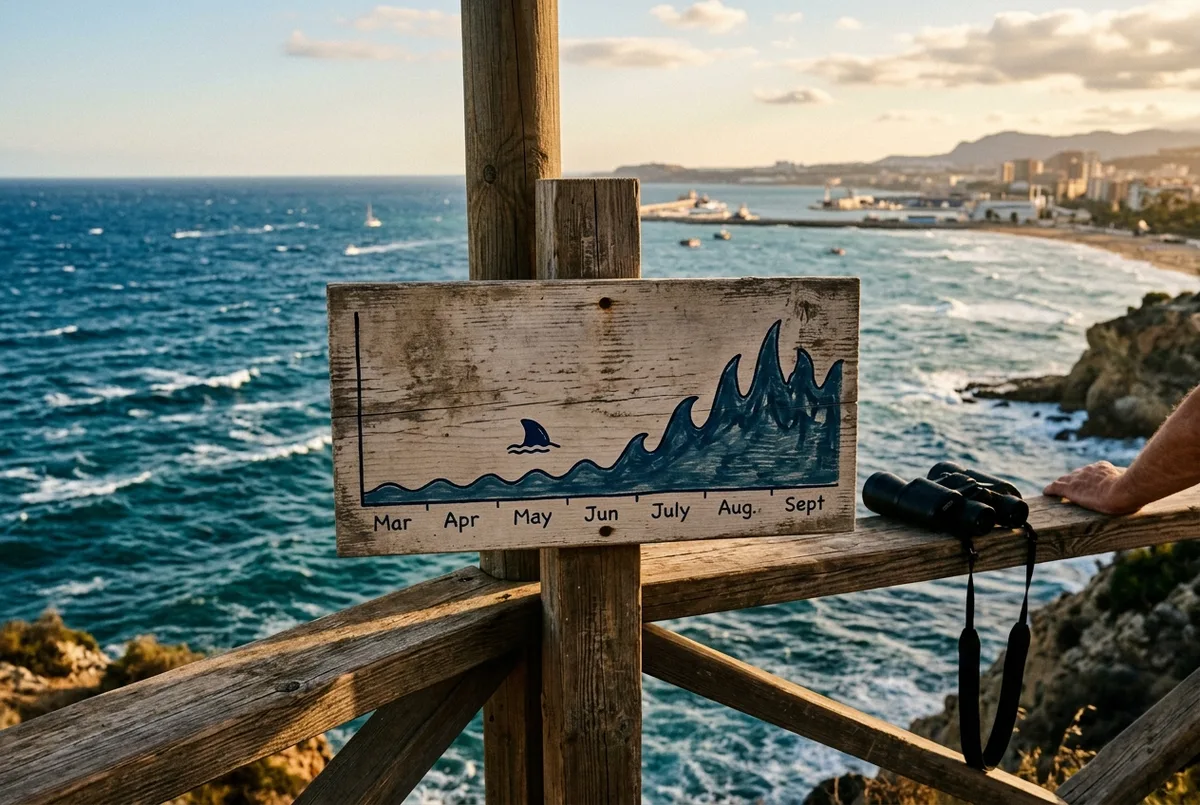
What Other Marine Life Might Change With the Season?
Whales, rays and turtles are occasionally reported alongside dolphins on the longer snorkeling-focused tour, and these sightings can shift with the same seasonal current patterns that affect dolphin activity. My guide to the marine life you might see on a Malaga boat trip covers the fuller range of species if dolphins are not the only thing you are hoping to spot.
I would go into any of these trips with broad curiosity rather than a single-species checklist, since the sea rarely cooperates with a narrow set of expectations.
Should You Avoid Booking in Winter?
Not necessarily. Winter sailings still run and dolphins remain present year round, but rougher weather is more common, which can affect both comfort on board and how easy a sighting is to spot from deck. I would check the forecast for your specific travel dates rather than ruling out a winter trip entirely just because it is not peak season.
My honest advice is that a calm winter morning can genuinely outperform a choppy summer afternoon for visibility, so do not assume summer automatically wins just because it is the more popular season to visit.
Why Does Calm Water Matter So Much for Spotting Dolphins?
A dolphin surfacing in flat, glassy water creates a visible ripple and a clear dorsal fin that is easy to pick out from a distance. On a choppy sea, that same fin blends into the wave pattern, and the crew has to rely more on experience and luck than on a clean visual line across the water.
I think this is the single biggest reason sea state matters more than the exact calendar date. A skilled crew on a rough day can still find dolphins, but a calm day makes the search genuinely easier for everyone on board, not just the professionals watching from the helm.
What Should You Do If You Don’t See Any Dolphins?
Free cancellation policies and honest odds quotes exist precisely because sightings are never guaranteed, so I would check your specific booking’s policy before you go rather than being surprised afterward. Some operators offer a second attempt or a partial refund if conditions were unusually poor, though this varies by listing and is worth confirming directly rather than assuming.
My honest advice is to treat a no-sighting outing as a real possibility going in, not a failure of the trip itself. The sail along the Costa del Sol coastline and the chance itself are worth the ticket price even on the roughly one-in-five sailings that come back without a confirmed dolphin.
Does Wind Direction Affect Your Chances?
Onshore winds that push waves toward the coast tend to roughen the water faster than offshore breezes, which is part of why Costa del Sol mornings, before the typical daily wind pattern builds, tend to run calmer than afternoons. The Alboran Sea sits in a transitional zone between the Atlantic and the Mediterranean, which contributes to its own particular wind and current patterns compared to calmer stretches further into the Mediterranean proper.
I would not try to become a wind forecaster before booking a dolphin trip. Checking a basic marine forecast for your sailing day and favoring a morning slot when you have the choice covers most of what actually matters here.
My Honest Recommendation
If your travel dates are flexible at all, I would aim for a spring or early summer morning departure, since that combination gives you the calmest, most consistent conditions for spotting dolphins. If your dates are fixed to a different season, do not skip the trip over it. Book an early slot where possible, check the forecast the day before, and go in with realistic expectations rather than a guarantee in mind. For the full comparison of which specific dolphin tour fits your trip best, my Malaga dolphin watching pillar guide covers prices, routes and the private charter option.
Frequently Asked Questions
What is the best month to see dolphins near Malaga?
Spring through early summer tends to bring the calmest water, which makes sightings easier to spot, though dolphins are present in these waters year round.
Is morning or afternoon better for dolphin watching in Malaga?
Morning, generally, since coastal winds tend to build through the day and calmer water makes a dolphin’s fin easier to spot from the deck.
Are dolphins guaranteed on a Malaga dolphin watching tour?
No. Operators quote roughly an 80 percent chance of a sighting, which is a strong likelihood but never a guarantee, since dolphins are wild animals.
Are there dolphins in Spain year round?
Yes, common bottlenose dolphins and striped dolphins live year round in the Alboran Sea and the Strait of Gibraltar, rather than migrating through seasonally.