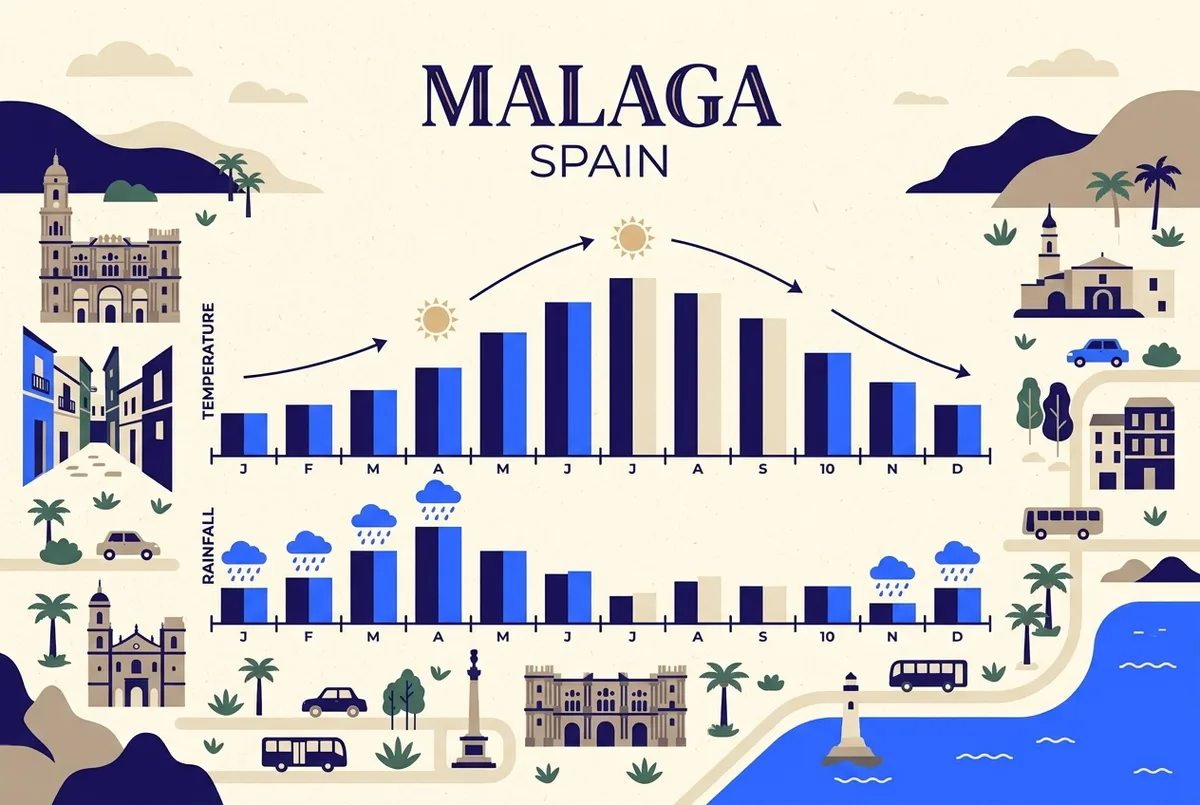
The best time to visit Malaga is May, June or September, when the city gives you reliably warm, sunny weather without the August premium on hotels and the crowds that come with it. I have gone through the real monthly pattern for temperature, rain and crowd levels so you can match your dates to what you actually want from the trip, whether that’s a quiet old town or a warm sea. If you’re deciding when to come at all, my every current malaga boat tour I track comparison is worth a glance too, since the season you pick changes which boat trip makes the most sense.
What’s the Best Overall Time to Visit Malaga?
May, June and September consistently come up as the sweet spot, with daytime temperatures in the comfortable mid to high twenties Celsius, long sunny days and sea temperatures warm enough to swim without August’s crush of visitors.
I would pick June over September if a slightly cheaper trip matters more to you, since prices start climbing again once summer holidays are confirmed, while September tends to have the calmer, more settled sea. Either month gives you the weather without the worst of the queues at the cathedral or the Alcazaba.
What’s Malaga Like in Winter (December to February)?
Mild by northern European standards, with daytime highs usually in the mid to high teens Celsius and the occasional rainy week. This isn’t a beach trip season, but it works well as a city break built around the old town, museums and long lunches.
I would still pack a proper jacket for the evenings, since the temperature drops noticeably after dark and the sea breeze off the bay has real bite in January. Boat tours run on a reduced schedule in winter and conditions on the water are rougher more often, so I’d book a flexible date rather than a fixed slot if a sunset sail is part of the plan.
What’s Malaga Like in Spring (March to May)?
This is the month range where the city starts to feel genuinely warm again, climbing from mild March days into comfortable May afternoons in the low to mid twenties. Rain tapers off through the season, and by May the sea is edging toward swimmable for anyone not put off by cooler water.
I would target the second half of May specifically if you want the best balance of good weather and lower prices, since the Easter holiday period around late March or April brings a short spike in both crowds and hotel rates that catches a lot of first-time visitors off guard.
What’s Malaga Like in Summer (June to August)?
Hot and dry, with July and August regularly pushing into the low thirties Celsius and barely any rain at all. The sea is at its warmest and most swimmable during these months, which is exactly why hotel prices and crowd levels peak alongside the temperature.
I would only plan an August trip here if the heat genuinely doesn’t bother you, since midday walking around the old town in direct sun is a different experience than the same walk in May. Early morning or evening sightseeing becomes the practical move once the summer heat sets in, and that’s also when the better boat tour slots, like the sunset sail, make the most sense.
Is Malaga Warm in Winter?
Yes, by comparison with most of Europe, though not warm enough for swimming. Daytime temperatures typically sit in the mid to high teens Celsius, which is genuinely pleasant for walking around outdoors in a jacket, even if it falls well short of a summer beach day.
I’d treat a winter visit as a city and culture trip rather than a coastal one. The old town, the cathedral and the museums all work fine in January weather, and you get the added benefit of thinner crowds at every one of them.
When Are the Biggest Crowds and Highest Prices?
July and August, hands down, followed by the Easter holiday week and any major local festival dates. Hotel prices in peak August can run noticeably above the rest of the year, and popular attractions see real queues by mid morning.
I would avoid booking anything for the first two weeks of August specifically if crowds bother you, since that stretch tends to be the single busiest window of the whole year on this coast. If you have any flexibility at all, shifting even two or three weeks earlier into July softens both the price and the lines considerably.
Does the Season Change Which Boat Tour You Should Book?
Yes, in a couple of real ways. Winter sailings run on a thinner schedule and are more likely to get shortened or rescheduled for sea conditions, while summer gives you the widest choice of departures, including the swim stop cruises that only make sense once the water is genuinely warm.
My best time for a catamaran tour in Malaga guide goes narrower than this page, since it covers which slot in a single day works best rather than which month. I’d read that one once you’ve already picked your travel dates and want to lock in a specific departure.
Should the Beaches Factor Into Your Timing?
Yes, if swimming matters to your trip at all. The sea stays genuinely cold through spring and doesn’t warm up properly until June, so a beach-focused visit scheduled for April or early May will leave you admiring the water rather than getting in it.
My Malaga beaches guide breaks down sea temperature by month in more detail than fits here, which is worth checking if a beach day is a non-negotiable part of your plans.
Does the Time of Year Affect Safety or Family Suitability?
Not really, no. Malaga stays a relaxed, walkable city across every season, and the usual big-city precautions around valuables apply equally whether you’re visiting in January or August. The practical differences are about comfort and crowding, not safety.
My is Malaga safe guide covers the family-specific questions in more depth if that’s part of what’s shaping your decision alongside the season.
What If You’re Arriving by Cruise Ship?
The season matters less here, since most cruise calls give you only a few hours ashore regardless of the month. A winter port call still lets you cover the cathedral and the harbor comfortably, while a summer call means more heat to manage during a short window on foot.
My Malaga cruise port guide covers exactly where ships dock and how to make the most of a tight window, which matters more to a cruise visitor’s planning than the time of year does.
My what to do in Malaga guide ties this seasonal picture together with the one-day and three-day itineraries, worth reading if you want the fuller trip plan rather than just the weather.
My Honest Recommendation
If your dates are flexible at all, I would book for late May, June or September, in that order of preference. You get genuinely warm weather, a swimmable sea by June, and none of August’s crush at the cathedral, the Alcazaba or on the water.
What I would not do is write off winter entirely if those are the only dates that work for your schedule. Malaga holds up well as a mild-weather city trip in December or January, you just shouldn’t plan a beach day or a guaranteed sunset sail around it, since both depend on conditions that favor the warmer months.
I would also build in one spare day around any specific boat departure, regardless of which month you travel in. Even a reliable month like June can throw up one rough-sea afternoon that pushes a sailing to the next day, and having that slack removes the stress of treating a single booked slot as your only chance to get on the water.
Frequently Asked Questions
What is the best month to visit Malaga?
May, June and September are the strongest months overall, combining warm, sunny weather with lighter crowds than July and August.
Is Malaga warm in winter?
Yes, by European standards, with daytime highs typically in the mid to high teens Celsius, though it’s too cool for swimming and the sea breeze has real bite after dark.
When is Malaga the most crowded?
July and August are the busiest months, especially the first two weeks of August, alongside a shorter spike around the Easter holiday period.
Does the season affect whether boat tours run?
Yes. Summer offers the widest range of departures, including swim stop cruises, while winter sailings run on a reduced schedule and are more exposed to weather-related changes.
What should I pack for the shoulder season months?
A light jacket for the evenings and a swimsuit for warmer days, since May and September can swing noticeably between a warm afternoon and a cool evening, especially out on the water.
More detail on the region’s climate pattern sits on Wikipedia’s Málaga page if you want the broader geographic context before you book.